
Local News
Blue Ridge Wildlife Center Patient of the Week: Northern Raccoon
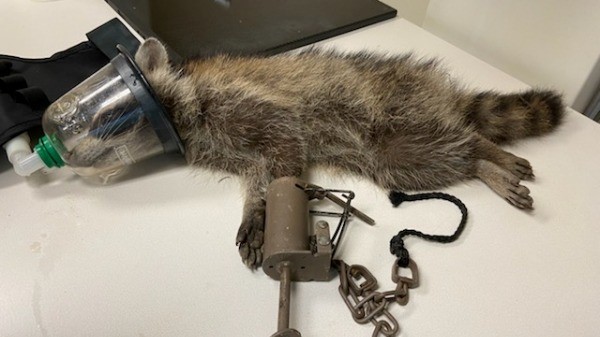
Deterring “nuisance wildlife” vs trapping and killing.
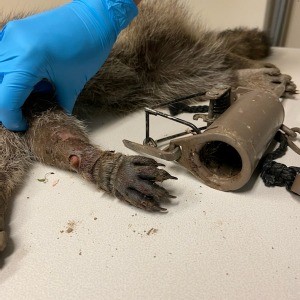
This poor, young raccoon was brought to us after it was spotted in a backyard in Stephenson, VA, with a raccoon-specific leg-trap on its paw. This raccoon did everything it could to get free, as evidenced by the severe damage done to the raccoon’s paw, but the trap had been tightly snapped onto the foot.
Though many types of traps are legal, there are requirements to check these traps every 24 hours at a minimum. Due to the appearance of these injuries, we suspect this raccoon had been suffering with these injuries for multiple days before getting help. Unfortunately, due to the extent of the injuries, the only option we could offer was euthanasia.
It’s important to note that while many people set traps to get rid of “nuisance animals”, this is not a sustainable or effective long-term solution.
Trapping and killing a few raccoons each year only opens up the area to neighboring raccoons looking for new territories and resources while potentially orphaning babies in the process.

A better solution would be exclusion and prevention.
Identifying how animals are accessing your yard or unwanted area can help you prevent these animals from accessing these places to begin with. Is there a hole in a fence or attic that can be patched? Does the chicken coop need to be reinforced with wire? Can wire be placed into the ground to prevent digging or access underneath structures?
Ask yourself what is attracting the animals to these areas. Maybe bird feeders should be taken down, or pets fed inside, small livestock housed in a secure enclosure, or the yard kept neat and trim to reduce shelter and food resources.
Lastly, you can help encourage animals to avoid or move away from areas altogether by using household ammonia soaked on rags placed around the entrances of dens, radios, motion-activated flood-lights, or livestock guardians.

As we continue to destroy and take habitat away from wildlife, we can all do our part by being empathetic and learning to coexist with our wild neighbors by using humane techniques to keep them safe and out of unwanted spaces.
As this case shows, traps can be uprooted and animals can escape while still ensnared, which only extends their suffering. It is also illegal to relocate wildlife, so when wildlife is caught in a trap the only legal course of action is to euthanize.
If you have an issue with a wild animal in or around your home, give us a call and we can help you with your specific situation so that we can hopefully avoid tragic ends like this one.
Looking for an easy way to help native wildlife? Become a monthly BRWC donor! For as little as $5/month, you can provide year-round, sustainable support that helps us fulfill our mission.





The House and Senate Both Released New Budgets. Here’s How They Align and Diverge.

‘It’s Outrageous’: Spanberger Navigates Budget Fight, Democratic Unrest Six Months Into Governorship

How Public Education has Transformed in Virginia Since the Nation’s Founding

Tangier Island: Rising Waters, Eroding Shores, Dwindling Time

Ceasefire Reached with Iran, Ending Hostilities and Opening Strait of Hormuz

Larry D. “Dick” Smelser (1950 – 2026)

Carol L. Goddard (1948 – 2026)

Fauquier Health Reports More Than $40 Million in 2025 Community Impact

Commentary: As Virginia’s Data Center Industry Expands, Should Warren County Be Part of the Future Digital Economy?

Good, Bad and Ugly

This Week’s Showtimes at Royal Cinemas as of June 19th

From Wallpaper Cleaner to Toy Box Legend

Expert Tips for Loading a Moving Truck Properly

Intimacy Remains an Important Part of Life for Many Older Adults

Trump Proclaims Flag Day and National Flag Week Ahead of America’s 250th Anniversary

United States Army Marks 251 Years of Service
National Parks Shouldn’t Be Political Billboards

Ask the Expert: Should I Refinance to Pull Cash Out of My Home?

Market Value, Not Tax Assessment, Should Guide Home Listing Price

Natural Cemeteries Offer a Greener Way to Plan Final Resting Places

Ole Timer’s Antiques Celebrates 25 Years on Front Royal’s Main Street

Protecting the Valley: Lessons from Prince William County’s Data Center Boom

VDOT: Warren County Traffic Alert for June 15 – 19, 2026

Beth Macy Brings Congressional Campaign to Warren County Democratic Gathering
