
State News
Youngkin’s energy plan calls for reevaluation of Clean Economy Act
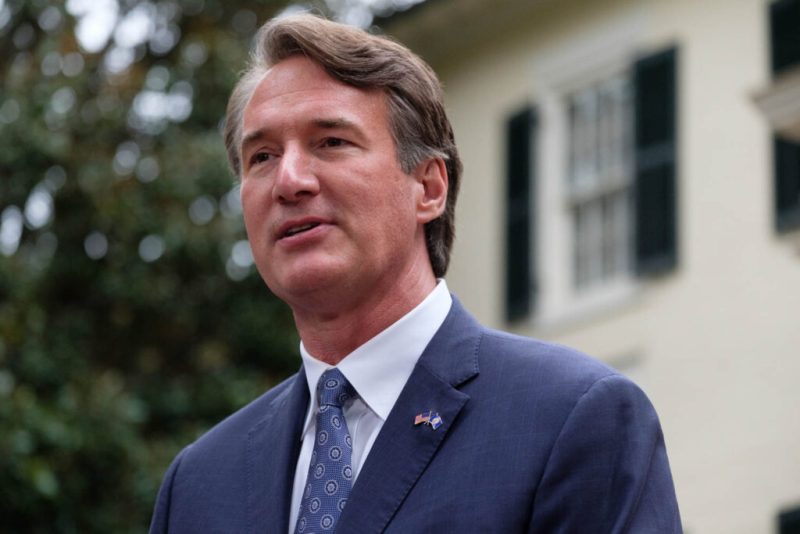
Gov. Glenn Youngkin. (Ned Oliver / Virginia Mercury)
In his state energy plan, Republican Gov. Glenn Youngkin is pushing for revisions to the Virginia Clean Economy Act, a 2020 Democratic-driven law that ordered the state’s electric utilities to decarbonize by midcentury, but he faces opposition from clean energy advocates who say the step would move Virginia backward.
The four-year plan, unveiled in front of state and federal representatives Monday at Lynchburg-based transformer manufacturer Delta Star Inc., sets the executive office’s roadmap for Virginia energy policy.
“A clean energy future does not have to come at the cost” of customers, Youngkin told the crowd before unveiling what he called an “all-of-the-above approach” to Virginia’s energy needs.

The 35-page plan pushes for periodic reviews of the VCEA; greater protections for ratepayers and the restoration of power to the State Corporation Commission, which regulates the state’s electric utilities; and increased use of nuclear energy.
Among its critics are Senate Democrats, including state Sen. Jennifer McClellan, D-Richmond, a patron of the VCEA.
“Gov. Youngkin cannot pick and choose which laws he implements,” McClellan said in a statement. “He should abandon this flawed attack on affordable clean energy and get to work implementing the laws that Virginia passed.”
Another look at Clean Economy Act
Youngkin’s plan calls for a reevaluation of the VCEA next year and every five years, stating the current grid can’t reliably serve customers if it relies solely on “intermittent” renewable sources like solar and wind.

The administration says the state will need to import energy from outside the commonwealth because of the VCEA mandates.
According to PJM Interconnection, the regional electric grid Virginia is a member of, the state was a net importer of electricity Tuesday afternoon.
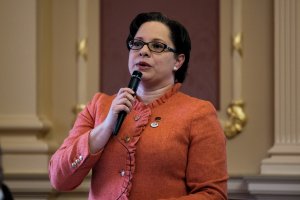
Sen. Jennifer McClellan, D-Richmond, on the Senate floor. (Ned Oliver/Virginia Mercury)
McClellan said the VCEA’s requirements offer the right “balance” for Virginia’s transition to renewables.

With communities throughout Virginia being hit by flooding due to sea level rise and rainfall shifts linked to climate change, ” she said, “this is not the time to reverse a clean energy transition,” she said.
“Gov. Youngkin’s plan would create roadblocks and mandatory five-year-reviews that would undermine the predictability of Virginia’s energy system and make our commonwealth lose out on new jobs,” McClellan stated.
Kim Jemaine, director of Virginia Advanced Energy Economy, a business group that advocates for clean energy, said businesses want to know the direction Virginia is headed in terms of clean energy use. Developers of renewable energy projects prefer to have certainty about state policy as they prepare to undergo lengthy application and siting processes.
Other companies like Amazon and Lego, which recently announced it would open a site in Chesterfield, are also increasingly looking to source their energy from renewables.

Protecting ratepayers
Youngkin’s plan also pushes for the transfer of more authority to the State Corporation Commission as it oversees the utilities’ compliance with the 2018 Grid Transformation and Security Act and the Virginia Clean Economy Act.
In his plan, Youngkin suggests the General Assembly should pass legislation to allow the SCC to defer the utilities’ renewable portfolio standard (RPS) requirements. These requirements, which are outlined in the VCEA, set timelines for how much of a utility’s energy must be sourced from renewables.
He also recommends removing the use of “public interest” mandates, a legal instrument that favors SCC approval of projects. Instead, he said the SCC should have the flexibility to analyze the costs of both substitute technologies and renewable energy sources, and use “least-cost” resource planning.
Both the Grid Transformation and Security Act and the Virginia Clean Economy Act “have resulted in projects bypassing the SCC’s methodology,” the energy plan states. “At the same time, the SCC is mandated to approve them and associated cost recovery because of statutory requirements.”

Youngkin particularly criticizes Virginia energy law that allows electric utilities to impose rate adjustment clauses, or riders, on customer bills for particular projects.
According to Youngkin’s plan, legislation in 2007 authorized the use of RACs, which have led to residential bill increases of over $30 per month. The State Corporation Commission in a recent report also calculated that RACs have added roughly $36 to Appalachian Power customers’ monthly bills and $30 to Dominion customers’ monthly bills since 2007. That’s on top of average electricity prices for Virginians increasing by 47%, compared to 39% nationally, between 2005 and 2020, Youngkin’s report details.
The energy plan calls for the creation of a work group to determine how to improve the RAC structure for ratepayers and increase bill transparency.
While reforming customer rates is laudable, said Walton Shepherd, Virginia policy director for the Natural Resources Defense Council, it requires a massive overhaul of the system that legislators may not be willing to engage in.
Electric utility rate reform efforts quashed by Senate committee
Will Cleveland, a senior attorney at the Southern Environmental Law Center who has extensively advocated for ratepayer reforms at the General Assembly, said his organization “would happily work with the governor to rectify the fundamental rate making problems” but argued the report unfairly demonizes clean energy as the cause of bill increases.
“We cannot retreat from our clean energy transition,” Cleveland said. “Proven, falling-cost resources like solar, wind, and battery storage simply do not threaten reliability or affordability, as this energy plan claims.”
Although efforts to reform Virginia’s rate structure failed in 2021 in the Democrat-controlled Senate, McClellan stated that she would be open to cooperating on ratepayer protection legislation in the upcoming 2023 session. She also noted a 2022 study from Virginia Advanced Energy Economy that concluded customers will save on their bills as a result of the VCEA by 2030.
“The facts are clear: The Virginia Clean Economy Act will increase the use of more affordable clean energy and lead to a decrease in the cost of energy bills for the average Virginia family by $30,” McClellan stated.
New nuclear push
As part of a push for alternative energy sources, Youngkin’s energy plan seeks to increase the use of nuclear energy in Virginia.
Youngkin’s plan was made in consultation with the Virginia Nuclear Energy Consortium, a body created by a 2013 law to make Virginia “a national and global leader in nuclear energy.”
Virginia currently has four operating nuclear reactors at two power plants: the North Anna plant in Louisa County and the Surry plant in Surry County, both operated by Dominion Energy.
At the moment, nuclear constitutes about a third of the state’s energy generation. Youngkin’s plan calls for increased use of the source, along with hydrogen and other alternative energies, because of the concerns linked to the “intermittent” nature of solar and wind.
“We have to be all in on nuclear energy,” said Youngkin Monday before pledging to launch a commercial small nuclear reactor in Southwest Virginia in the next decade.
Nuclear will be major for Virginia’s electric grid as utilities decarbonize, regulator says
But Jemaine said small nuclear reactor technology is not established enough to be relied on as an energy source.
“We can’t wait for some future silver bullet,” Jemaine said.
Infrastructure for solar and wind already exists and is expected to receive a boost from the recently passed Inflation Reduction Act, Jemaine noted. She added that the Siemens Gamesa turbine blade construction facility coming to Hampton Roads could be eligible for the federal legislation’s tax incentives.
When asked about how realistic the administration’s plans for nuclear expansion are, both Dominion Energy and Appalachian Power Company sent back statements saying they were still reviewing the plan but were looking forward to working with the governor on it.
California concerns
At the end of his plan, Youngkin reiterated several talking points from the past few months challenging legislation passed by Virginia in the 2021 session to adopt vehicle emissions regulations set forth by California, adding that the state is facing grid reliability concerns.
Jemaine, Shepherd, and McClellan noted that car manufacturers are headed toward producing electric vehicles, in line with California’s recent move to ban the sale of new gas-powered vehicles by 2035.
“We need to get ahead of it,” McClellan stated, adding Virginia’s choice was either to follow regulations set by the federal government, with no say, or California, with some say. She also said she would oppose any legislation to reverse the 2021 law, which has been introduced by state Sen. Stephen Newman, R-Lynchburg.
by Charlie Paullin, Virginia Mercury
Virginia Mercury is part of States Newsroom, a network of news bureaus supported by grants and a coalition of donors as a 501c(3) public charity. Virginia Mercury maintains editorial independence. Contact Editor Sarah Vogelsong for questions: info@virginiamercury.com. Follow Virginia Mercury on Facebook and Twitter.




Leisa Wood (1961 – 2026)

GO VOTE: Because Complaining Alone Isn’t a Good Strategy

The Third Most Important Gift Is Laughter

Skates, Treats and Safety: Warren County Sheriff’s Office Foundation Pack October with Community Events

Celebrate Kids Day Returns Sept. 27 With Family Fun, Activities and a New Train Ride

Survey Finds That More Than Half of Virginia Families With Children Face Food Insecurity

Could Virginia’s New Law Allowing 1% Sales Tax for School Construction Need a Fix?

Now They Want to Rein It In

From Oil Field to Gas Pump: What Really Determines What We Pay?

When Fields Flood: How Farmers Protect Crops and Plan for the Future

Draw Your Circles: A Map of the People Who Matter

A Heartfelt Farewell and Thank You
Data Centers Are Necessary. That Doesn’t Mean Warren County Needs One

Diesel Prices Shoot Upward as Top Farm-State GOP Senator Begs Trump for Export Embargo

From One Barrel of Oil: What Do We Actually Get?

CNN, MS Now, Politico Sue Trump Over White House Ban

Virginia-Made Marine Mattress Nominated for 2026 Manufacturing Cup

Virginia Works Plans October Job and Resource Fairs in Front Royal, Winchester

UVA Health Prince William Medical Center Earns Third Consecutive Magnet Recognition

Virginia Hunger Study Finds 37% of Blue Ridge Households Faced Food Insecurity

WCHS Volleyball Hosts Manassas Park on Sept. 22

ORDER OF PUBLICATION: In the Circuit Court for Warren County, Virginia

The Papers You Would Grab in Ten Minutes

Spanberger’s Carbon Tax Sets New Record, Could Add $1 Billion to Electricity Costs in One Year
