
Food
A guide to DIY salad dressing
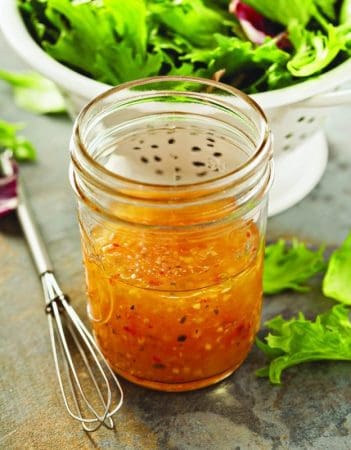
There are many reasons to make your own salad dressing. Aside from impressing dinner guests and allowing you to discover new flavors, homemade dressings and vinaigrettes are healthier than their store-bought counterparts. Here are a few tips to get you started.
With oil
When using oil as a base for your salad dressing, use a ratio of three parts high quality vegetable oil to one part acid.
Sunflower seed oil, extra-virgin olive oil and a variety of nut oils make great bases, while popular acids include balsamic vinegar, lemon juice and apple cider vinegar.
The last step is to add a thickening agent such as mayonnaise, Dijon mustard, yogurt or honey, and aromatics like garlic or herbs.
Without oil
The key to a good dressing is that it coats your salad’s components. While oil is perfect for the job, you can use other ingredients.
For a liquid dressing, try citrus juice or soy sauce. If you want a creamier result, opt for mustard or low-fat cream or yogurt.
Preparation
Any airtight and transparent container, such as a Mason jar, can be used to prepare your dressing. Simply put all the ingredients inside, close the lid and shake until you get a homogenous mixture.
If you don’t use all of it right away, simply store it in the refrigerator in the same container. It’ll keep for up to several weeks.
To ensure you create a salad dressing you’ll love, start by making a scaled-down version of the recipe using the same ratios. If you don’t like the result, start over. This type of testing allows you to sample the outcome without using a ton of ingredients.




Front Royal Man Charged with Two Counts of Forcible Sodomy Following RSW Regional Jail Investigation

James Edward “Jimmy” Mahoney (1953 – 2026)

Ask Stewart: Are There Any Scary Trees?

Janet Denny Casarotti (1933 – 2026)

Virginia Breeders Championship Series Opens at Shenandoah Downs with Impressive Performances

Clark Preston “Lucky” Cameron (1961 – 2026)

Commentary: Data Centers and AI – A Rare and Raw Issue in Virginia for This Midterm Election

Douglas MacArthur “Dougie” Green (1964 – 2026)

Dominion’s Energy Roadmap Keeps Fossil Fuels in the Mix, Expands Solar

Richmond No Kings Protest Turns Out Hundreds Ahead of Midterm Election

Dr. William Kent Renas (Bill) (1948 – 2026)

Careful With Money, Invisible to Lenders

3 Car Problems You May Avoid By Paying Attention

American Songs Concert Coming to First Baptist Church in Front Royal on October 25

When Grief Doesn’t Ease With Time

Sudden Cardiac Arrest May Not Be As Sudden As Its Name Suggests

100 Years of Hundred Acre Wood

A Moment of Honor: Veterans Receive a Powerful Tribute at the Tomb of the Unknown Soldier

Samuels Public Library Invites Young Writers and Artists to Enter 48th Annual Holiday Contest

New Exhibitions Bring World-Class Contemporary Art to Downtown Front Royal

VDOT: Warren County Traffic Alert for October 19 – 23, 2026

Discover The Many Benefits Of Organized Sports

The Family Bond That Doesn’t Necessarily End When Contact Does

Virginia State Police Urge Drivers to Stop for School Buses and Students
