
Local News
Blue Ridge Wildlife Center Patient of the Week: Eastern Fence Lizard
We recently admitted a species that many people have likely walked past without ever noticing: the Eastern fence lizard (Sceloporus undulatus). Their incredible camouflage and stillness make them surprisingly easy to miss, even when they are right in front of you.

This patient arrived with significant trauma, including a laceration to the upper left eyelid and multiple puncture wounds along the body.
One of the most striking findings was that the lizard appeared puffed up far beyond normal.
Radiographs confirmed the cause: pneumocoelom, or free gas within the body cavity.

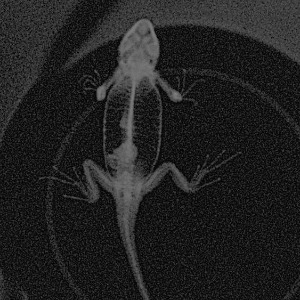
In the image, this shows up as extensive black space, indicating air well beyond the normal lung field.
Unlike mammals, reptiles do not have a diaphragm separating the chest and abdominal cavities.
In mammals, the lungs and heart are contained within the thorax, while digestive and other organs sit in the abdomen.

In reptiles, birds, and amphibians, the body cavity is more continuous. This means that when there is damage to the lungs, air can leak out and accumulate throughout the body, rather than staying confined to one region.

The puncture wounds and internal injury suggest a predator interaction. Fortunately, in mild to moderate cases of pneumocoelom, patients can recover with time and supportive care.
This lizard is currently receiving pain management, antibiotics, and careful monitoring as the body gradually reabsorbs the excess air.
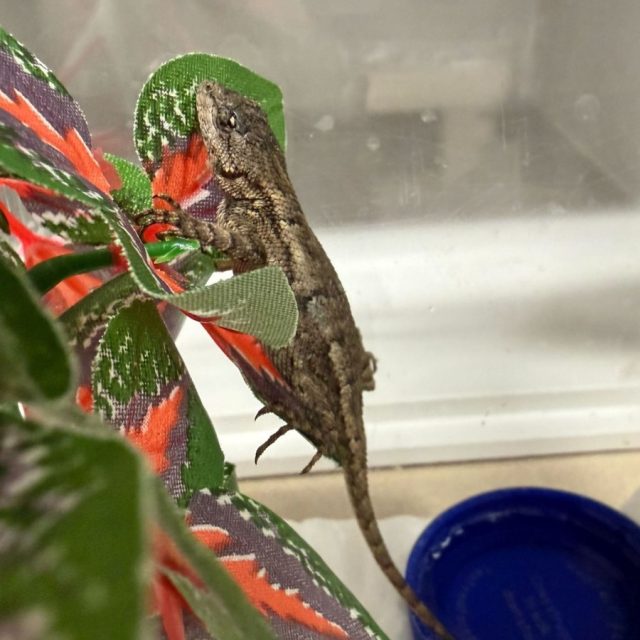
Eastern fence lizards are a vital part of their ecosystem. They are “sit-and-wait” predators, relying on sharp vision to detect and capture passing insects.
By helping to control insect populations, they play an important role in maintaining ecological balance.

Because their hunting strategy depends so heavily on sight, we are watching the eye injury closely as it heals.
These lizards prefer sunny, open woodland habitats where light reaches the ground.
You can often find them on logs, rock walls, fence posts, and old wooden structures, blending seamlessly into their surroundings.
They are found throughout much of the eastern and central United States, including here in the mid-Atlantic.

SPONSOR A TREE FOR EARTH DAY!
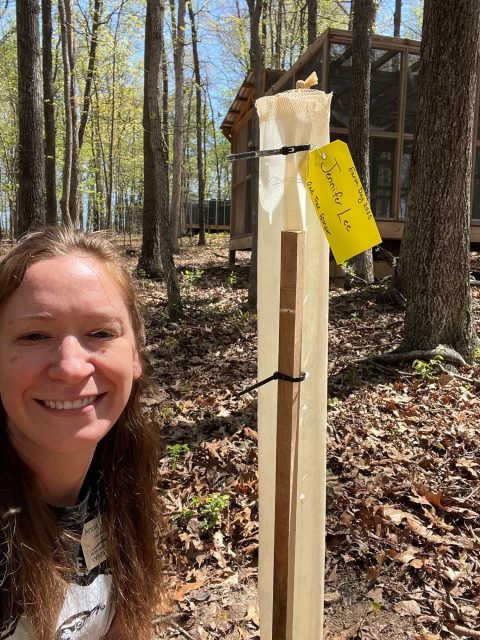
This Earth Day, we’re planting 550 native trees at our Center to restore our forest and protect the future of local wildlife. Each sapling will be fitted with a tree guard to shield it from deer and ensure it can thrive for years to come. Whether you sponsor one tree or several, your donation will help build a healthier ecosystem—for today and tomorrow.
Once the trees are planted and tagged, you’ll receive a photo (you may even get a selfie from our Executive Director!)
Because wildlife thrives where wild spaces grow. CLICK HERE TO SPONSOR A TREE!
Each tree you sponsor is $100. If you would like to sponsor more than one, simply donate more. If you don’t want to sponsor, but would still like to support, please enter your donation amount in the ‘other’ box. Thank you!

Looking for an easy way to help native wildlife? Become a monthly BRWC donor! For as little as $5/month, you can provide year-round, sustainable support that helps us fulfill our mission.


Leisa Wood (1961 – 2026)

GO VOTE: Because Complaining Alone Isn’t a Good Strategy

The Third Most Important Gift Is Laughter

Skates, Treats and Safety: Warren County Sheriff’s Office Foundation Pack October with Community Events

Celebrate Kids Day Returns Sept. 27 With Family Fun, Activities and a New Train Ride

Survey Finds That More Than Half of Virginia Families With Children Face Food Insecurity

Could Virginia’s New Law Allowing 1% Sales Tax for School Construction Need a Fix?

Now They Want to Rein It In

From Oil Field to Gas Pump: What Really Determines What We Pay?

When Fields Flood: How Farmers Protect Crops and Plan for the Future

Draw Your Circles: A Map of the People Who Matter

A Heartfelt Farewell and Thank You
Data Centers Are Necessary. That Doesn’t Mean Warren County Needs One

Diesel Prices Shoot Upward as Top Farm-State GOP Senator Begs Trump for Export Embargo

From One Barrel of Oil: What Do We Actually Get?

CNN, MS Now, Politico Sue Trump Over White House Ban

Virginia-Made Marine Mattress Nominated for 2026 Manufacturing Cup

Virginia Works Plans October Job and Resource Fairs in Front Royal, Winchester

UVA Health Prince William Medical Center Earns Third Consecutive Magnet Recognition

Virginia Hunger Study Finds 37% of Blue Ridge Households Faced Food Insecurity

WCHS Volleyball Hosts Manassas Park on Sept. 22

ORDER OF PUBLICATION: In the Circuit Court for Warren County, Virginia

The Papers You Would Grab in Ten Minutes

Spanberger’s Carbon Tax Sets New Record, Could Add $1 Billion to Electricity Costs in One Year
