
Local News
Rotary partners with Virginia Beer Museum to fight polio worldwide
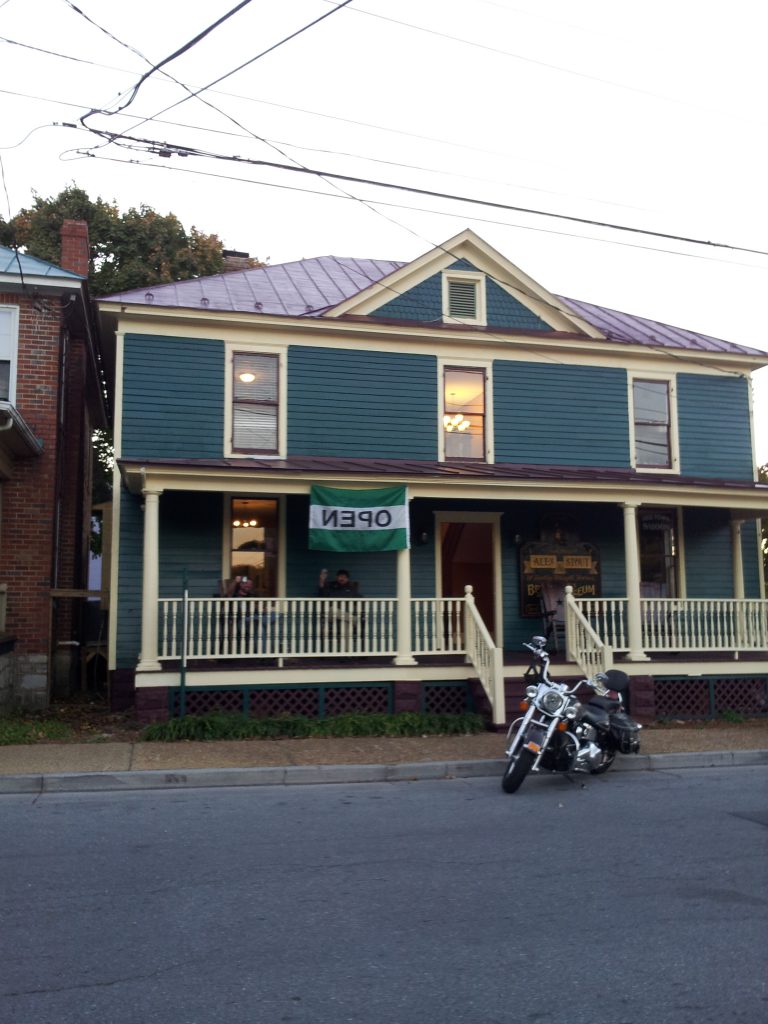
Front Royal’s Virginia Beer Museum will be ‘NEPO’ for business on June 8 to help raise awareness of the global fight to eradicate polio. Photo Susan O’Kelley
The Virginia Beer Museum’s “Pilsners for Polio” fundraising event originally slated for Thursday, May 11, has been moved to Thursday, June 8. Guitarist extraordinaire Ralph Fortune will provide entertainment; with a little luck there will be Bavarian-themed clothing for some of the beer “curators”; and Mac Shack Express will be set up for the hungry.
Whenever it occurs, the event is designed to raise both awareness and money to support the ongoing effort to eradicate polio around the globe. Rotary International has partnered with UNICEF and The Bill and Melinda Gates Foundation to raise funds toward this long-standing effort. In fact, this reporter remembers – I mean he knows someone who remembers, standing in line in about second grade for polio shots, circa mid-1950s or so, not long after a polio vaccine was first discovered by Dr. Jonas Salk.

Dr. Jonas Salk – Photo/Wikipedia

Wikipedia observes, “Until 1955, when the Salk vaccine was introduced, polio was considered one of the most frightening public health problems in the world … The 1952 U.S. epidemic was the worst outbreak in the nation’s history. Of nearly 58,000 cases reported that year, 3,145 people died and 21,269 were left with mild to disabling paralysis, with most of its victims being children. The ‘public reaction was to a plague,’ said historian William L. O’Neill.
According to a 2009 PBS documentary, “Apart from the atomic bomb, America’s greatest fear was polio … In 1938, U.S. President Franklin D. Roosevelt, the world’s most recognized victim of the disease, founded the National Foundation for Infantile Paralysis (known since 2007 as the March of Dimes Foundation), an organization that would fund the development of a vaccine.
“In 1953, Salk administered the experimental vaccine to himself, his wife and sons … In its first few years, the vaccine had a remarkable impact on the number of new cases of polio reported. There were more than 57,000 cases in the United States in 1952 … A decade later, that number fell to less than a thousand … When the vaccine was approved for general use in 1955, Salk became a national hero. President Dwight D. Eisenhower gave him a special citation at a ceremony held in the Rose Garden at the White House.’
And while Salk’s vaccine was eventually replaced with a live virus vaccine developed by Albert Sabin that “was less expensive and easier to use”, it was Salk who began the medical revolution now on the verge of worldwide success.


Beer curator Michael Williams promises to help direct you toward the correct pilsner this Thursday, though it won’t be a Pilsner for Polio until June 8. Photo/Roger Bianchini
The Beer Museum event here is spearheaded on the Rotary Club of Front Royal side by Bret Hrbek. According to our Rotary insider and Beer Museum “curator” Michael Williams, a Rotary Club of Warren County member, only three countries remain before the world will officially be considered polio free – those are Pakistan, Afghanistan and Nigeria, with Nigeria being “very close” to joining the nations of the world already declared “polio free”.
“Getting into tribal areas has been our biggest challenge,” Williams pointed out. “There is so much distrust, some tribal leaders think that foreign doctors and nurses coming in are spies for their enemies, and only want to poison their children.”
But slowly it appears that distrust has for the most part been broken outside of areas marked by ongoing internal conflicts fueling regional and even global mistrust.





Hampton Leaders Cool to Limited Army Corps Flood Solutions

As Virginia Officials Weigh Data Center Pushback, Report Details Industry’s Public Service Funding

Black Lung Cases Surging Again in Southwest Virginia, Appalachia; Miners Blame Blocked Regulations

DNC Approves 2028 Presidential Nominating Cycle Starting in South Carolina, Nevada

The Shouting Comes From a Minority

Give the Credit Away

Why Reliability Often Matters More Than Brilliance at Work

Good Lions Celebrates First Anniversary with Ribbon Cutting and Renewed Commitment to Community

Data Center Misinformation is Killing the Golden Goose

Ragweed Can Make Melon Itchy

Judicial Accountability Must Apply to Everyone

Warren County Grand Jury Returns 15 Indictments, Including Equipment Theft, Child Neglect and Drug Charges

NAACP Warren-Page Branch Announces Fall Meetings and November Election

Cline Highlights Veterans Entrepreneurship Bill, Financial Privacy and Farm Trade

TGI Fridays Wins Sheriff’s Office Foundation’s First ‘Battle of the Bites’

Stone Branch Arts Center to Host Fall Open House on Aug. 22
Fairness and Accountability Should Apply to All

Family Stability is Education Policy

VDOT: Warren County Traffic Alert for August 17 – 21, 2026

Virginia State Police Report Nearly $1 Million in Drug Seizures During Weekly Crime Suppression Operations

Community Concerns Grow Over Proposed Strasburg Data Center Campus

Putting People Back at the Center of Community Leadership

Warren County Middle School FFA Earns National Three-Star Gold Rating for Second Straight Year

Every Drug Scourge Has Ended the Same Way. Will This One?
