
Local News
Blue Ridge Wildlife Center Patient of the Week: Eastern Cottontail
Earlier this month, we admitted an adult Eastern Cottontail who was found lethargic and unable to walk in a homeowner’s yard.

Photo by Abbey Harney
While that is not an unusual reason for a rabbit to come into our care, this turned out to be a very unusual case.
This cottontail tested positive for tularemia, a rare, highly infectious and nationally reportable zoonotic disease caused by the bacterium Francisella tularensis.

Our patient was minimally responsive on intake and actively dying by the time she reached us. We provided prompt humane euthanasia to prevent further suffering.
While many people think of wildlife hospitals primarily as places that treat individual injured and orphaned animals, cases like this demonstrate another incredibly important role we play: wildlife hospitals can help identify diseases circulating in wild populations before they become a larger risk to people or domestic animals.
That is One Health in action.

At BRWC, our focus on One Health recognizes that the health of humans, animals, and our shared environment are deeply connected.

Identifying diseases circulating in wildlife populations and sharing that information with veterinary, human health, public health, and other professionals can help identify risks that extend far beyond a single patient.
Tularemia is uncommon in Virginia. The Virginia Department of Health reports an average of approximately one human cases each year.
But for people with certain activities or exposures, it is an important disease to know about.
Rabbits and hares are particularly susceptible to tularemia, and people can become infected through direct contact with an infected animal, tick or deer fly bites, contaminated water, or by inhaling contaminated dust or aerosols.

Rabbit hunters may be exposed while handling infected animals, while mowing and other landscaping activities can create a risk if equipment runs over an infected animal or contaminated material becomes airborne.
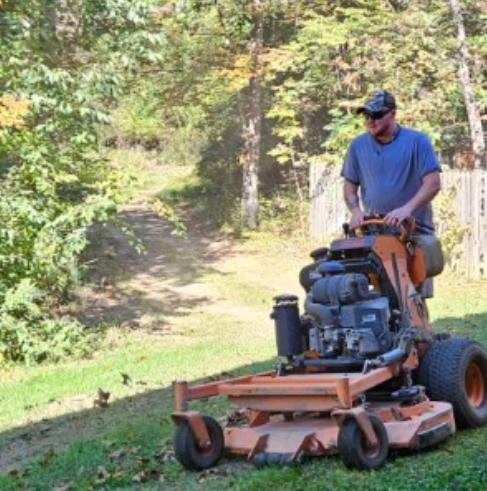
In fact, CDC recommends checking an area for sick or dead animals before mowing and avoiding mowing over animal carcasses.
Tularemia can present in six different clinical forms in people, depending largely on how the bacteria enter the body. Signs vary considerably, but illness often begins with symptoms such as fever, chills, headache, fatigue, and muscle aches. Because tularemia is rare and its symptoms can resemble many more common illnesses, a history of exposure to ticks, wildlife, hunting, or similar activities can be important information to share with a healthcare provider.
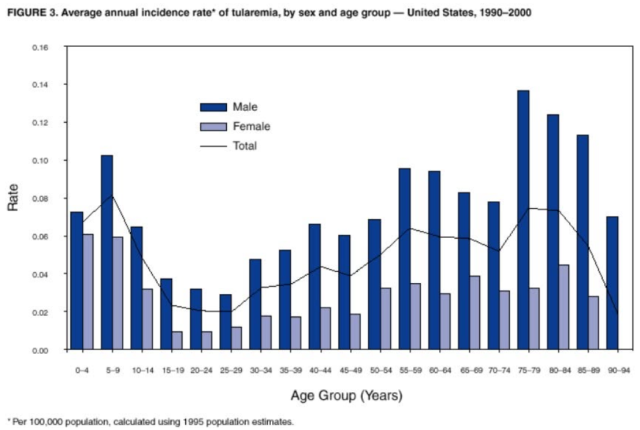
Historically, tularemia has also been diagnosed more often in males than females. In CDC surveillance data from 2011 through 2022, 63% of reported patients were male. Differences in outdoor, occupational, and recreational exposures may contribute to that pattern.

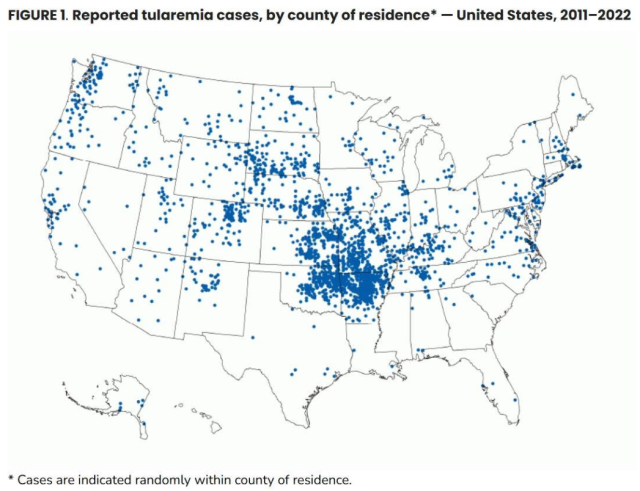
Where you live matters too. Although tularemia occurs across much of the United States, cases are concentrated in parts of the central U.S. From 2011 through 2022, half of all reported U.S. cases occurred in just four states: Arkansas, Kansas, Missouri, and Oklahoma.
Check out the CDC map and graph included with this post to see how cases are distributed geographically and among different populations.
Humans aren’t the only ones at risk. Cats are particularly susceptible to tularemia and may be exposed through hunting infected wildlife or tick bites.
Signs can include fever, lethargy, loss of appetite, swollen lymph nodes, and respiratory or gastrointestinal illness. Keeping cats indoors reduces both their risk of exposure and their impact on wildlife.

Cases like this also show why wildlife disease surveillance matters. Changes in climate, land use, biodiversity, and disease vectors can influence how zoonotic diseases spread. More than 6 out of every 10 known infectious diseases in people can spread between animals and people.
And one practical reminder: please wear gloves or other protective equipment when a wildlife rehabilitator asks you to. We often don’t know what is making an animal sick when you first encounter it.
Those precautions help protect you, your pets, our staff, and the wildlife we are all trying to help.
Looking for an easy way to help native wildlife? Become a monthly BRWC donor! For as little as $5/month, you can provide year-round, sustainable support that helps us fulfill our mission.




County Supervisors Fill Vacant Planning Commission Seat, Look to Future on Processes and Capital Improvements

America 250: ‘I Only Regret That I Have but One Life to Lose for My Country’

Building Gas Plants More Important Than Dominion Sale, Data Center Politics

Home Inspectors Help Buyers and Sellers Understand a Property’s Condition

Bowling Together: Why Work Is More Than a Paycheck

This Week’s Showtimes at Royal Cinemas as of September 24th

POLICE: 7 Day FRPD Arrest Report 9/21/2026

Blue Ridge Wildlife Center Patient of the Week: Eastern Cottontail

UVA Health Review Examines Real-World Results of Incisionless Liver Tumor Treatment

Maximilian James Donora (1995 – 2026)

Dollars for Dolly Campaign Aims to Turn Small Gifts Into Big Community Impact

Clean Virginia: NextEra’s Utility Takeover Attempts, Alleged Political Moves Relevant to Merger Case

Commentary: If You Enjoy Virginia’s Wildlife, Thank a Hunter or Angler

Spanberger Presses Congress for AI Guardrails as States Forge Ahead

‘Drive Them Into Hell’: Trump Ponders Destruction of Iran at United Nations

National Chicken Month Celebrates a Versatile Source of Protein

Face Paint That Can Read Your Heartbeat

Leisa Wood (1961 – 2026)

GO VOTE: Because Complaining Alone Isn’t a Good Strategy
The Third Most Important Gift Is Laughter

Skates, Treats and Safety: Warren County Sheriff’s Office Foundation Pack October with Community Events

Celebrate Kids Day Returns Sept. 27 With Family Fun, Activities and a New Train Ride

Survey Finds That More Than Half of Virginia Families With Children Face Food Insecurity

Could Virginia’s New Law Allowing 1% Sales Tax for School Construction Need a Fix?
