
EDA in Focus
State, municipal officials continue to express concerns over tax bill
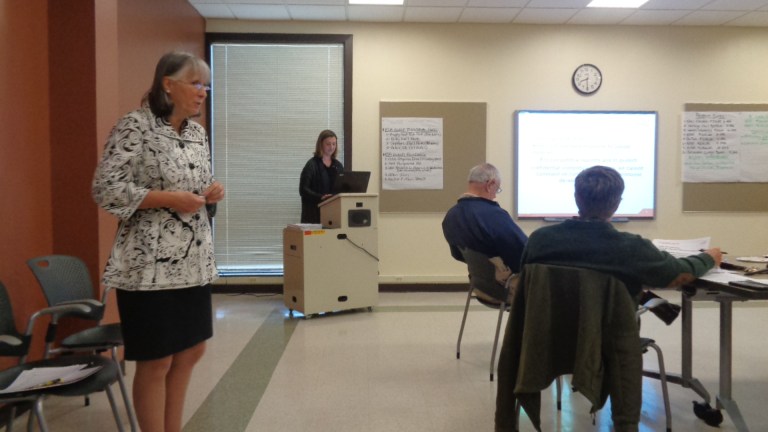
State economic development official Sandra McNinch told municipal officials to alert their congressmen to concerns over economic impacts of some provisions of the Republican tax bill. Photo/Roger Bianchini
Comments by a Virginia state economic official at a December 8 joint meeting of the local Economic Development Authority, Warren County Board of Supervisors and Front Royal Town Council pointed to multiple fronts upon which the Republican tax reform bill still on the table could negatively impact municipal governments’ ability to finance several types of capital improvement projects.
In fact, Virginia Economic Development Partnership General Counsel Sandra McNinch suggested that local officials call their congressmen to alert them to their concerns about the proposed elimination of private activity bonds, New Market Tax Credits and Historic Structure Rehabilitation Credits. All three help make capital improvement projects more affordable to municipalities and their citizens.
On December 8, VEDP General Counsel McNinch said as much as $34 billion in funding variables could be impacted by removal of the private activity bonds. Of most concern are impacts on “charitable” facilities such as hospitals and schools.

Among items on the local capital improvement agenda that could be impacted are the new Front Royal Police Headquarters (New Market Tax Credits), any chance of saving the shell of the Afton Inn (Historic Tax Credits), the long-discussed new Warren Memorial Hospital slated for land off Leach Run Parkway, and perhaps even long-term financing options for already completed projects like the new middle school.

Municipal and economic development projects like some on the table here, including a new police headquarters and the potential of saving the shell of the Afton Inn, could suffer from drafts of the Republican tax reform bill.

As Royal Examiner first reported in a November 13 exploration of the initially-unveiled Trump-House Republican tax reform bill, the elimination of private activity bonds immediately got the attention of local officials. see related story
“The issue here is really about the ability to refinance bonds when the interest rates come down,” Warren County Administrator Doug Stanley told us, observing, “The Board of Supervisors has been able to save a significant amount of money in past few years when we were able to refinance bonds associated with school construction.”

“In addition to a dramatic cut in the corporate tax rate, the recently announced House tax bill takes serious, direct aim at the municipal bond market. Both measures are sure to interfere with state and local governments’ ability to cost-effectively provide financing for projects,” long-time county consultant Springsted wrote in alerting its client base of the brewing problem.
“Some of the proposed tax cuts and job acts could be detrimental to the economic development of not just this community, but the nation as a whole. Economic development relies on some of these very successful programs to create jobs and tax revenue for the community,” local Economic Development Authority Executive Director Jennifer McDonald added.
Following the December 8 EDA joint meeting, we asked McDonald to elaborate on the range of concerns local and state economic development officials have in various drafts of the Republican tax reform bill.
“As mentioned in the report from Sandi McNinch, General Counsel for the VEDP, there are several items that could directly impact IDA’s/EDA’s in future economic development activities:

- The elimination of private activity bonds. The IDA currently can issue bonds to charitable organizations such as schools, private schools, hospitals, etc. and pass along the tax exempt rate for those entities. With the new tax reform this option would be eliminated, which would cost those organizations more money to build new facilities, renovate current facilities, etc. The increased cost would then be passed along to the ultimate user (patients), locality, and/or State – it could have a big economic impact on localities.
- New Market Tax Credits – The House version eliminates them all together, but the Senate version does not mention elimination for 2018 and 2019. This could impact several projects the Town and County are looking at financing through the NMTC program.
- Historic Rehab Credit – the House version repeals it with a transition whereas; the Senate version repeals 10% credit and 20% credit claimed ratably over a 5-year period. This could impact projects that may have utilized the program for historic renovations in the Town.
“Those are the major impacts to economic development with the main hit being the elimination of private activity bonds.”
McDonald also forwarded us an e-mail from the International Economic Development Council (IEDC) addressing the proposed Republican tax legislation. Like McNinch, the IEDC urged economic officials across the nation to join them in seeking changes to the Republican tax bill.
“There is still time to raise your concerns with your Members of Congress, particularly if one of them happens to be on the conference committee. IEDC remains committed to protecting the tax-exempt status of municipal bonds (including Public Activity Bonds), historic tax credits and New Markets Tax Credits and we continue to communicate those views to Congress,” the IEDC wrote.
“Please continue to encourage your elected officials to include EDA in future disaster supplemental funding requests,” the IEDC added. “Be sure to include any examples you may have of how EDA has supported your community following disasters. If you have been fortunate enough to not need EDA in these circumstances, you should include a project or two from your community that has used EDA funding in the past. These past few months have seen unprecedented disasters impacting multiple states across broad regions. While your community may not be impacted, it is important to recognize that disaster can strike any community and when it does, resources like those offered by EDA will be there to help you rebuild only if we continue to show strong support for them today.

“Your voices as economic development practitioners and constituents will always resonate more and it is critically important that you reach out to your elected officials and speak up in support of federal economic development resources and a tax plan that supports responsible growth,” the IEDC concluded.
Attempts to pin down any changes on these fronts included in the Republican House-Senate tax bill compromise reported on December 14 were unsuccessful prior to publication. The status of private-activity bonds, New Market Tax Credits and Historic Rehabilitation Credits as the Republican Tax Bill progresses toward a possible vote prior to the end of the year will be addressed as that information becomes available.




Warren Memorial Hospital Achieves Another National Recognition

Warren County Tourism Debate Expands Into Broader Conversation About Governance, Accountability, and the Future of Regional Marketing

Cardinals Host New Market Rebels Thursday, July 9 at Bing Crosby Stadium

Court Battles Leave Virginia’s New Assault Weapons Ban in Legal Limbo

Virginia Ranks Among Top States for Highway Safety and Mobility Benefits, but Challenges Remain

The Supreme Court Should Be Above Politics

Commentary: Virginia’s Atlantic Coast Should Be Protected, Not Turned Into a Sacrifice Zone

Dropped Your ACA Insurance Due to Spiking Premiums? You Could Qualify for a State Subsidy This Fall

CDC Monitors Rise in Cyclosporiasis Cases as Summer Produce Season Begins

Kathryn E. “Kathy” Warren (1958 – 2026)

Virginia Expands RetirePath Retirement Program to More Small Businesses

Everyone Is Going to the Moon. Will We Fight Over It?

Ice Down the Hall: A Peculiarly American Demand

This Week’s Showtimes at Royal Cinemas as of July 10th

POLICE: 7 Day FRPD Arrest Report 7/6/2026

Smoking Makes an Unwanted Comeback Among Gen Z, UVA Expert Warns

Blue Ridge Wildlife Center Patient of the Week: Canada Geese

Moratorium, Potential Closure of Portion of Church Street to Car Traffic, and Automobile Graveyard at Town Council Work Session

Congratulations – But the Fight Continues

I-81 Improvements Continue Across Virginia as Safety, Widening and Traffic Projects Expand

Fifteen Killed in Virginia Crashes Over Independence Day Holiday

Rock Bottom Band to Perform July 9 at Gazebo Gatherings

The Art of the Porch Chat

Virginia Joins Multistate Push Against ICE Rollback on Detainee Death Reporting
