
National News
How a 19th-Century Law, Central to a National Telehealth Abortion Case, Could Impact Virginia
The Supreme Court temporarily preserved telehealth access to the abortion drug mifepristone on Thursday until an appeals court can rule on a legal challenge to the medication the state of Louisiana filed against the U.S. Food and Drug Administration.
The result could have national implications by outlawing the mailing of Mifepristone — even in states without abortion bans, like Virginia.
While the Supreme Court has allowed Mifepristone to continue to be mailed for now, one of the dissenting justices, Clarence Thomas, cited a long-dormant 1873 law that blocks mailing “every article or thing designed, adapted, or intended for producing abortion, or for any indecent or immoral use.”
Abortion opponents have long considered that law, dubbed the Comstock Act, as a possible vehicle to enact a national ban on the procedure. One of them, activist Mark Lee Dickson, has traveled the country to persuade local governments to pass ordinances to apply the defunct law.
“If enforced, it would have the same impact as a national ban on abortion,” he said in 2024. “That is because it is a de facto national abortion ban.”
The mailing of Mifepristone “could easily be described as the largest drug-trafficking operation in the history of the United States,” Dickson said last week, adding that mailing the medication should cease in order to “restore the rule of law in this country.”
Meanwhile, telehealth company Hey Jane can continue to operate for the time being.
The company launched in Virginia in 2023 and currently serves 23 states. In an email, co-founder Kiki Freedman described their role as a crucial conduit for people seeking reproductive healthcare.
“For many patients, especially those facing cost, travel, or privacy barriers, it is the only way they can access care,” she said. “When telehealth access is restricted, countless patients are left without care altogether.”
Legal limbo nationally, some state certainty pending
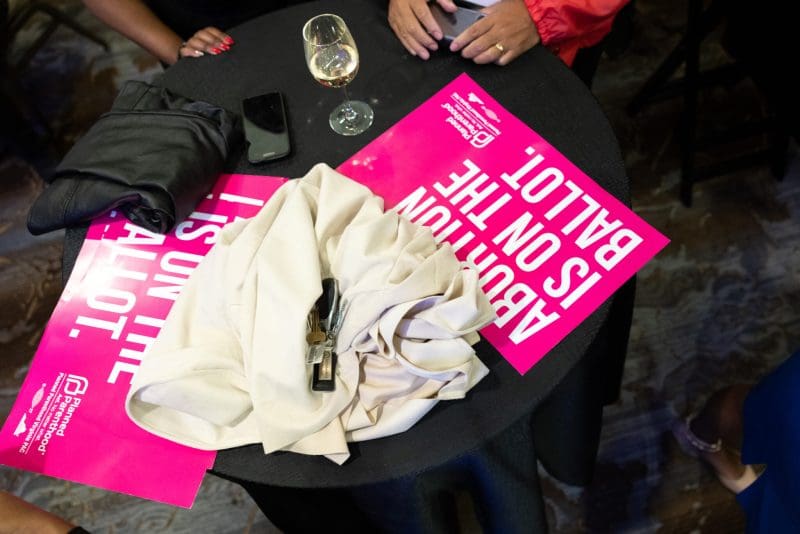
Abortion rights signs seen during a Democratic Election Night Party in Richmond in 2023. (Photo by the Virginia Mercury)

Though further action by the appeals court, the FDA, or the Supreme Court could affect mifepristone specifically, Virginia’s pending amendment, if passed, would still protect other avenues to abortion.
Abortion is currently legal in Virginia, but it is not constitutionally protected. Embedding the right to the procedure into the state constitution would make their access less subject to partisan turnover in state politics.
It would also mean that if telehealth abortions are outlawed federally, Virginians and people who travel could still get abortions.
But the referendum, too, is mired in lawsuits.
One challenges the ballot language as “misleading” to voters and seeks a rewrite ahead of November. Another claims that the constitutional amendment process was not fully followed in advancing the referendum, but a new post-facto law could invalidate that claim.
With the stay rooted in a lower court’s ruling on the Mifepristone challenge’s merits, and other legal challenges, and the Food and Drug Administration’s new review of Mifepristone, things could change in the months or years ahead.
State Sen. Jennifer Boysko, D-Fairfax, who sponsored the amendment, said it’s “exactly why” Democratic state lawmakers had pressed for the referendum.
“We cannot rely on the federal government anymore to protect us,” she said.
Repeal efforts
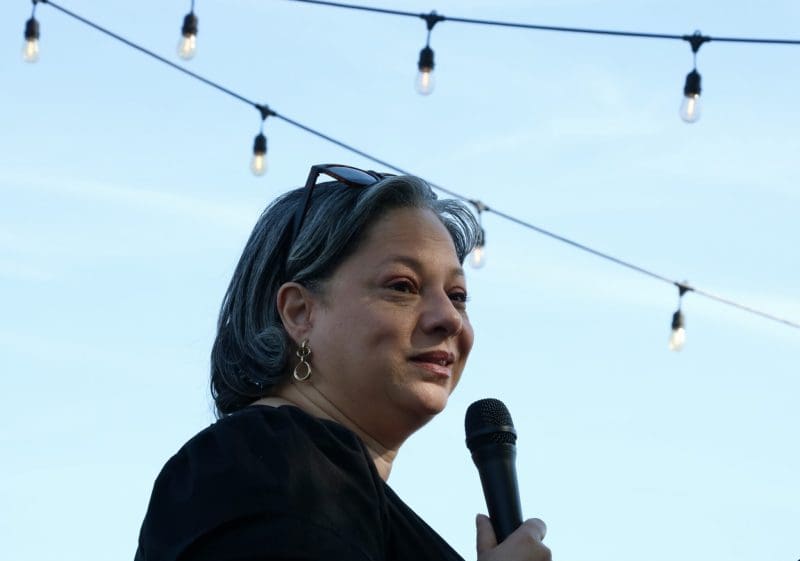
U.S. Rep. Jennifer McClellan, D-Richmond. (Photo by Charlotte Rene Woods/Virginia Mercury)
Though it’s unlikely to advance this year amid GOP majorities in Congress, U.S. Rep. Jennifer McClellan, D-Richmond, is again leading an effort to repeal Comstock Act provisions.

In 2024, she and now-Gov. Abigail Spanberger — then still a member of Congress — had carried legislation to remove abortion components from the act. They’re joined four previous unsuccessful attempts.
“We will still try,” McClellan said in a call last week.
She emphasized the health implications of continuing some pregnancies and how mifepristone is also used for safe miscarriage management to prevent deadly infection. She added that defending reproductive healthcare access is a “campaign issue” amid congressional midterms this year.
Virginians will soon be able to weigh in on the pending constitutional amendment to enshrine abortion, contraception, and fertility treatment access, which McClellan had also worked for years to advance as a state senator before joining Congress.
“Sometimes it takes years and years to get policy changed,” Boysko said.
Virginians will choose their congressional representatives on Nov. 4, and on the same day, will decide the fate of the reproductive rights amendment. Early voting will run from Sept. 18 to Oct. 31.
by Charlotte Rene Woods, Virginia Mercury
Virginia Mercury is part of States Newsroom, a nonprofit news network supported by grants and a coalition of donors as a 501c(3) public charity. Virginia Mercury maintains editorial independence. Contact Editor Samantha Willis for questions: info@virginiamercury.com.




This Week’s Showtimes at Royal Cinemas as of October 22nd

Debbie’s Lighthouse Combats Food Insecurity While Helping Small Businesses Grow in Front Royal

Decision on ‘EagleView’ Contractual Oversight of Photographic Assessment Technology Delayed to November 17

Blue Ridge Wildlife Center Patient of the Week: Great Horned Owl

Dominion-NextEra Merger Hits Turbulence, Faces Opposition from Virginia Leaders, SCC Staff

Cheaper Manufactured Homes Could Be Having a Moment, If Only States Can Catch Up

POLICE: 7 Day FRPD Arrest Report 10/19/2026

Sight & Sound’s JOSHUA LIVE! Comes to Royal Cinemas — Limited Run, October 29 – November 4

You Are Not Wasting the AI’s Time

The ‘Beer Belly’ Isn’t Really About Beer

Virginia State Police Launch Two-Day Interstate 81 Safety Enforcement Campaign October 21–22

Everybody Is a Leader Somewhere

Warren County Wildcats Host Meridian in Girls Volleyball Match Tuesday Night – October 20

Closing Virginia’s Childcare Affordability Gap Could Cost Up To $4.5B a Year

New Coalition Aims to Keep Virginians Covered as Medicaid Rules Tighten

General Assembly Calls Off Oct. 26 Special Session to Elect Judges

Trump Order Sets Up New Women’s Health Research Initiative at NIH, White House Task Force

What Is Puberty?

First New Class of Pain Medicine in Decades Comes with A 14-Day Limit

Front Royal Man Charged with Two Counts of Forcible Sodomy Following RSW Regional Jail Investigation

James Edward “Jimmy” Mahoney (1953 – 2026)

Ask Stewart: Are There Any Scary Trees?

Janet Denny Casarotti (1933 – 2026)

Virginia Breeders Championship Series Opens at Shenandoah Downs with Impressive Performances
